
I Wrote a 200 Page Beginner’s Guide to Horses. Here Is Why.

By Marie, Founder of Horse Riding XP Ghana
In Ghana, most people who work with horses every day are learning as they go.
Not because they are not capable. Not because they do not care. But because there is no school you can go to. No structured curriculum. No standardised training system. What exists instead is a collection of opinions, habits, and informal knowledge passed from person to person — and when it comes to horses, opinion is not enough.
Horses are governed by science. By biology. By behaviour that has been studied, documented, and understood over centuries. How they digest food. How they process stress. How they communicate before they react. How their bodies build muscle and lose condition. None of this is a matter of opinion. It is fact. And when people are making decisions about horse care based on what someone told them rather than what is actually true — the horses pay the price.
I have spent years working alongside people who are doing their absolute best with the information they have. And I decided it was time to give them better information.

What the guide is
The Absolute Beginner’s Guide to Horses is a foundational guide created specifically for people working with horses in Ghana and similar environments where formal training, structured education, and reliable information are limited.
It covers what a horse is and how its body works. How horses think, communicate, and behave — naturally, in herds, and under human management. What they need to eat, how they need to move, and what good daily care actually looks like in practice. And crucially — the difference between how horses live naturally and how they are managed in working environments like stables and beach operations.
It is over 200 pages. Because horses deserve more than a paragraph. And the people caring for them deserve more than guesswork.
Who it is for
This guide is for stable workers, horse handlers, riders, grooms, riding school assistants, horse owners, and anyone directly involved in the daily care or use of horses — especially in environments where formal equine education is not available.
It is not written for people with access to veterinary schools, certified trainers, or structured riding programmes. It is written for people working in real conditions. Not ideal conditions. Not textbook conditions. The kind of conditions that actually exist in Ghana right now.
If you are learning on the job, figuring things out as you go, or simply trying to do better for the horses in your care — this guide is for you.
Why I wrote it
I did not write this because I have all the answers. I wrote it because I have seen what happens when people are working from the wrong ones.
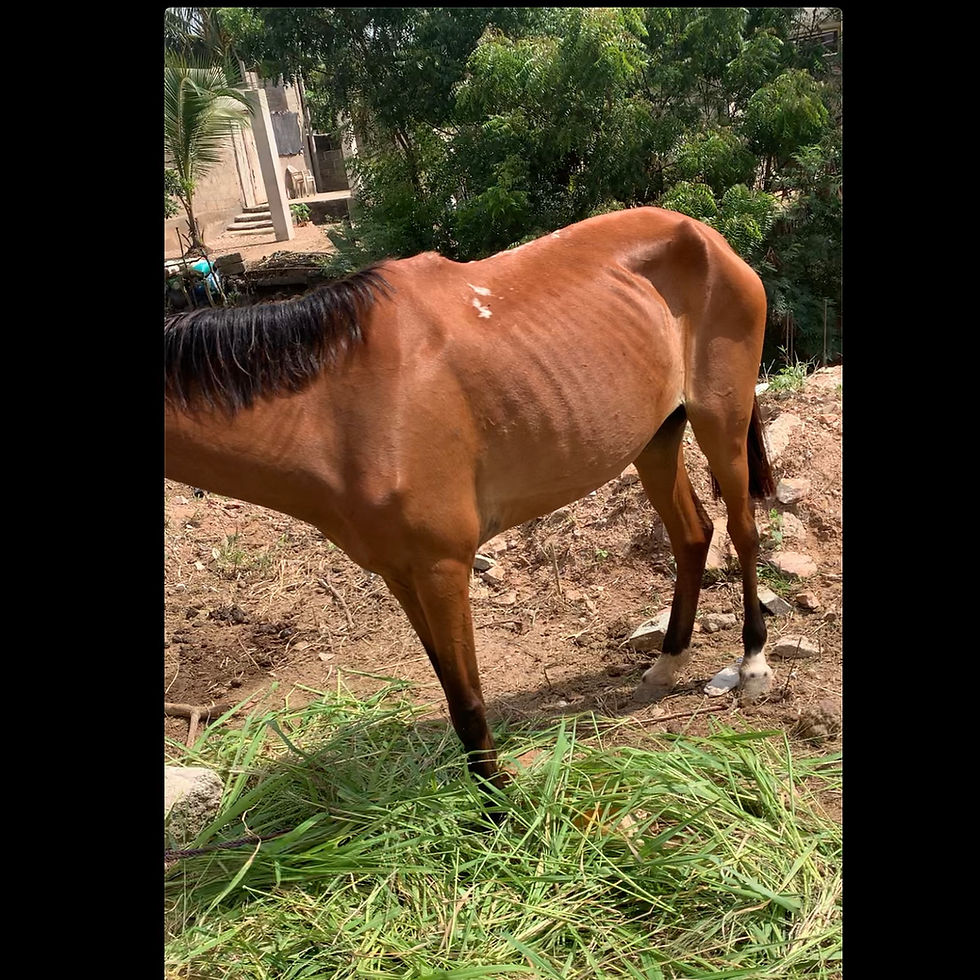
Horses misread because nobody explained how they communicate before they react. Horses losing condition because the feeding decisions being made are based on habit rather than nutrition. People getting hurt because they did not understand what the horse was telling them before it moved. Preventable situations happening every day not out of cruelty but out of a gap between what people know and what they need to know.
In many parts of Ghana, horses are being cared for, handled, and worked with by people who are doing their best — but whose best is limited by the quality of information available to them. Most of what they know came from someone else who learned the same way. And somewhere along the line the science got lost.
This guide exists to bring it back.
What makes this different
This is not a guide written for European or American riding schools and transplanted to Ghana. The goal is not to import foreign ideals into a context where they do not fit.
The goal is to build a clear, honest baseline of understanding that fits the realities of horse work in Ghana. Where resources are limited. Where veterinary access is inconsistent. Where training systems are still developing. Where people are doing the best they can with what they have — and deserve better tools to do it with.
This guide meets people where they are. And it gives them somewhere to go from there.
Why this matters
At Horse Riding XP Ghana we have always believed that education is welfare. That you cannot ask someone to do better if you have never shown them what better looks like. That the horses suffering on beaches and in stables across Ghana are not suffering because people do not care — they are suffering because the information and support systems that would help people care better simply do not exist yet.
This guide is one piece of changing that. A foundation. A starting point. A baseline that anyone working with horses in Ghana can build from.
Because everyone deserves a place to start. And so does every horse.
The guide is coming soon.
Follow along on our social media and website for updates.
📩 +233 26 988 2134
🌿 #AbsoluteBeginnersGuideToHorses #HorsesOfGhana #HorseEducation #RoadToSunflowerBeach #HRXPGhana


Comments